
Alzheimer's disease

This debilitating disorder causes memory loss, emotional problems and impaired reasoning. It affects one person in 10 over the age of 65 and almost half those over the age of 85.

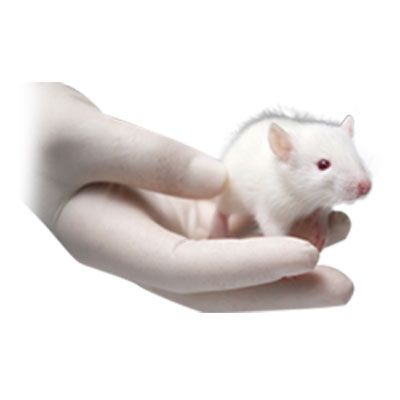
The abnormalities of Alzheimer's disease can be found in primates, ie humans and monkeys1, and in certain strains of mice2,3,4. Animal studies provide opportunities for understanding how Alzheimer's disease affects the brain, and for studying potential new treatments.

>Pathology

>Genetic Aspects

>Improving Diagnostics

>Lifestyle Issues

>Vaccines

>Potential Medicines

>References

Pathology 

The development of Alzheimer's disease is thought to be associated with the death of certain brain cells (known as cholinergic cells) due to the build-up of an insoluble protein called amyloid-beta (Aß) to form white plaques, and the formation of tangles of a second protein, tau, inside the sufferers' brain cells. Amyloid build-up severely inhibits several genes needed for learning and memory5.

Genetic Aspects

The brain changes of Alzheimer's are controlled by certain genes. For instance, research using genetically modified mice has shown how one particular version of the human APP gene leads to build up of damaging deposits in the brain6. Genetically engineered mice have been made that lack the enzyme that makes amyloid. There are compounds that block the enzyme, and these may be clinically useful if they are safe in humans7,8. By studying GM mice with Alzheimer's, scientists have discovered two more genes involved in the early stages of the disease9.

In 2002 and in 2003 scientists produced new genetically modified mice whose disease resembles the human disease more closely, which will mean that more research can be done in mice rather than monkeys10. There is a hereditary, early-onset form of the disease, which has been replicated by genetically engineering mice. Their study has thrown new light on how the genes work11. Other genetically modified mice have enabled scientists to study the plaques and tau tangles in more detail12.

Mice that were genetically engineered to have Alzheimer's have enabled scientists to show that the Aß enters the brain by riding piggyback on a non-toxic molecule called RAGE, which freely crosses the blood-brain barrier. The cells that form the barrier produce RAGE, and in Alzheimer's mice they overproduce it13.

Improving Diagnosis 

Studies using radioactive labelling of plaques in transgenic mice have shown that earlier diagnosis, and therefore earlier treatment, may be possible14. Brain cells rarely regenerate, probably because it requires a substance called nerve growth factor, which is present in fetuses but very rare in adults. Giving nerve growth factor to ageing monkeys restored the nerve axons in their brains to levels found in young monkeys15. Early diagnosis might one day be possible: a protein called m266 'draws out' amyloid protein from the brain of mice predisposed to the disease, and could prove clinically useful16.

Alzheimer's disease is associated with accumulation of a type of nerve cells called astrocytes where plaque has been deposited, but it has been uncertain until recently whether this is cause or effect. In 2003 research in Alzheimer's mice showed that the astrocytes migrate there in response to a chemical present in the plaques, which they attempt to degrade17. Treatments that attract more astrocytes might therefore benefit patients.

Lifestyle Issues

Boxing and football predisposes to Alzheimer's disease, and research in mice shows that this is causal: mice that received repeated head trauma developed plaque-like deposits faster than mice that suffered a single or no injury18. The bacterium Chlamydia pneumoniae is found at autopsy in the brains of 90% of Alzheimer's patients, and scientist have found that spraying it into the noses of mice caused plaque formation19.

Several animal studies confirm the clinical impression that healthy lifestyles offer a degree of protection. Physical activity – five months use of a running wheel – appears to inhibit brain changes in Alzheimer’s mice, enhancing learning ability and decreasing the deposition of amyloid in the brain20.

Obese people are at higher risk of developing Alzheimer’s, and this finding has been replicated in mice: in two studies, Alzheimer’s mice developed 30–50% less plaque when fed on calorie-restricted or low carbohydrate diets21,22. Aged, genetically engineered mice predisposed to Alzheimer’s disease that were fed the fish oil DHA (docosahexaenoic acid), an omega-3 fatty acid, developed significantly less amyloid protein23. The researchers hope that clinical trials will give similar results. Oxidative processes are associated with Alzheimer's, and mice predisposed to Alzheimer's have more oxidative brain damage than normal mice24. This explains why vitamin E temporarily slows disease progression in some patients.

People with diabetes have an increased incidence of Alzheimer's, and working on genetically engineered mice has shown why this happens25. A remarkable new insight came in 2005 when it was discovered that the brain, as well as the pancreas, produces insulin. This insulin does not affect blood sugar but is vital for the survival of brain cells. Therefore, therapies could be designed that specifically influence the actions of insulin in the brain26.

Vaccines

Several lines of research have led to vaccines that slow down or halt the disease in animals. They work by preventing or reducing formation of fibrils tangles or plaques, or by reducing the amount of them27, 28, 29. Some of these are now being tested in clinical trials.

A clinical trial of an effective Alzheimer’s vaccine had to be halted when it was found to cause brain inflammation in some people. Using a harmless form of the herpes virus, the immune systems of mice have been customised to prevent this while still causing a 20% decline in amyloid levels30.

Alzheimer’s mice had their disease halted or even reversed when injected with anti-beta-amyloid antibodies into an area of the brain called the hippocampus. The amyloid plaques were cleared in three days. The lesions caused by fibrous tangles disappeared two days later. Thirty days later, the researchers found the amyloid plaques had re-emerged but the tangle lesions did not31. Another approach was to vaccinate mice with the amyloid gene rather than the amyloid protein, using a gene gun; this, too, prevented brain inflammation32.

Potential Medicines

Three types of drug used to treat other diseases have been shown to inhibit plaque formation. One type is the non-steroidal anti-inflammatory drugs (NSAIDs), painkillers that are mainly used to treat rheumatic diseases. Of the 20 most commonly used NSAIDs, eight have successfully lowered amyloid levels in mice, using doses achieveable in humans33. The second drug is lithium, which is used for manic depression34. Some epidemiological studies have suggested that people taking statin drugs to control cholesterol have a reduced incidence of Alzheimer’s, and a mouse study throws light on this: blocking a pathway that controls cholesterol distribution in cells – using a drug not yet licensed for humans – dramatically reduced the number of amyloid plaques in the brains. Some of the treated mice were much better at learning their way through a maze than were untreated mice35.

The fibrils found in the brain of Alzheimer's patients are stabilised and bound by a protein called serum amyloid P component (SAP). In 2002 scientists discovered a compound that prevents the action of SAP and speeds its breakdown by the liver. The drug has already been shown useful in patients with a rare and fatal condition called systemic amyloidosis, and clinical trials in Alzheimer's patients have begun36.

References

1. Geula C, Wu C-K, Saroff D, Lorenzo A, Yuan M, Yankner BA (1998) Aging renders the brain vulnerable to amyloid ß protein neurotoxicity Nature Medicine 4, 827

2. Games D, Adams D, Alessandrini R, Barbour R et al (1995) Alzheimer-type neuropathology in transgenic mice overexpressing V717F ß amyloid precursor protein Nature 373, 523

3. Hsiao K, Chapman P, Nilsen S, Eckman C, Harigaya Y, Younkin S, Yang F, Cole G, (1996) Correlative memory deficits, Aß elevation, and amyloid plaques in transgenic mice Science 274, 99

4. Capsoni S, Ugolini G, Comparini A et al (2000) Alzheimer-like neurodegeneration in aged antinerve growth factor transgenic mice Proc Nat Acad Sci 97 6826

5. Marr RA, Rockenstein E, Mukherjee A et al (2003) Neprilysin gene transfer reduces human amyloid pathology in transgenic mice J Neurosci 23, 1992

6.Wengenack TM, Curran GL, Poduslo JF (2000) Targeting Alzheimer amyloid plaques in vivo Nat Biotech 18 868

7. Ohno M, Sametsky EA, Younkin LH et al (2004). BACE1 deficiency rescues memory deficits and cholinergic dysfunction in a mouse model of Alzheimer's disease Neuron 41, 27

8. Luo Y, Bolon B, Kahn S et al (2001) Mice deficient in BACE1, the Alzheimer's ß-secretase, have normal phenotype and abolished ß-amyloid generation Nature Neuroscience 4, 231

9. Reddy PH, McWeeney S, Byung S. Park BS et al (2004) Gene expression profiles of transcripts in amyloid precursor protein transgenic mice: up-regulation of mitochondrial metabolism and apoptotic genes is an early cellular change in Alzheimer's disease Human Molecular Genetics 13, 1255

10. Lewis J, Dickson DW, Lin W-L (2001) Enhanced neurofibrillary degeneration in transgenic mice expressing mutant Tau and APP Science, 293, 1487

11. Bozza T, McGann JP, Mombaerts P, and Matt Wachowiak (2004). In Vivo Imaging of Neuronal Activity by Targeted Expression of a Genetically Encoded Probe in the Mouse Neuron 42, 9

12. Oddo S, Caccamo A, Shepherd JD et al (2003), Triple-transgenic model of Alzheimer's disease with plaques and tangles: intracellular Aß and synaptic dysfunction Neuron 39, 409

13. Deane R, S, Yan SD, Submamaryan RK et al (2003) RAGE mediates amyloid-ß peptide transport across the blood-brain barrier and accumulation in brain Nature Medicine 9, 907

14. Holtzmann DM, Bales KR, Tenkova T et al (2000) Apolipoprotein E isoform-dependent amyloid deposition and neuritic degeneration in a mouse model of Alzheimer's disease Proc Nat Acad Sci 97 2892

15. Connor JM, Darracq MA, Roberts J, Tuszynskit MH (2001) Nontropic actions of neurotrophins: Subcortical nerve growth factor gene delivery reverses age-related degeneration of primate cortical cholinergic innervation Proc Nat Acad Sci 98, 1941

16. DeMattos RB, Bales KR, Cummins DJ et al (2002) Brain to Plasma Amyloid-ß Efflux: a Measure of Brain Amyloid Burden in a Mouse Model of Alzheimer's Disease Science 295, 2264

17. Wyss-Coray T, Loike JD, Brionne TC et al (2003) Adult mouse astrocytes degrade amyloid-ß in vitro and in situ Nature Medicine 9, 453

18. Uryu K, Laurer H, McIntosh T, et al (2002) Repetitive mild brain trauma accelerates Aß deposition, lipid peroxidation, and cognitive impairment in a transgenic mouse model of Alzheimer amyloidosis J Neurosci 22, 446

19. Little CS, Hammond CJ, MacIntyre A, Balin BJ and Appelt DM (2004) Chlamydia pneumoniae induces Alzheimer-like amyloid plaques in brains of BALB/c mice Neurobiology of Aging 25, 419

20. Adlard, PA Perreau VM, Pop V, Cotman CW (2005) Voluntary exercise decreases amyloid load in a transgenic model of Alzheimer's disease. J. Neurosci. 25, 4217

21. Wang J, Ho L, Qin W et al (2005) Caloric restriction attenuates β-amyloid neuropathology in a mouse model of Alzheimer's disease. FASEB J. published online 13 Jan, 2005.

22. Patel NV, Gordon MN, Connor KE et al (2005) Caloric restriction attenuates Aβ-deposition in Alzheimer transgenic models. Neurobiology of Aging 26, 995

23. Lim GP, Calon F, Morihara T (2005) A diet enriched with the omega-3 fatty acid docosahexaenoic acid reduces amyloid burden in an aged Alzheimer mouse model. J. Neurosci. 25, 3032

24. Praticò D, Uryu K, Leight S (2001) Increased lipid peroxidation precedes amyloid plaque formation in an animal model of Alzheimer amyloidosis J Neurosci 21, 4183

25. Schubert M, Gautam D, David Surjo D et al (2004) Role for neuronal insulin resistance in neurodegenerative diseases Proc Nat Acad Sci 101, 3100

26. De la Monte SM, Wands JR (2005) Review of insulin and insulin-like growth factor expression, signaling, and malfunction in the central nervous system: Relevance to Alzheimer's disease. J Alzheimer’s Dis 7, 45

27. Schenk D, Barbour R, Dunn W et al (1999) Immunization with amyloid-ß attenuates Alzheimer-disease-like pathology in the PDAPP mouse Nature 400 173

28. Chen G, Chen KS, Knox J et al (2000) A learning deficit related to age and ß-amyloid plaques in a mouse model of Alzheimer's disease Nature 408, 975

29. Sigurdsson EM, Scholtzova H, Mehta PD et al (2001) Immunization with a nontoxic/nonfibrillar amyloid-ß homologous peptide reduces Alzheimer’s disease-associated pathology in transgenic mice Am J Pathol 159, 439

30. Bowers WJ, Mastrangelo MA, Stanley HA et al (2005) HSV amplicon-mediated Aβ vaccination in Tg2576 mice: differential antigen-specific immune responses. Neurobiology of Aging 26, 393

31. Oddo S, Billings L, Kesslak JP et al(2004) Aβ immunotherapy leads to clearance of early, but not late, hyperphosphorylated Tau Aggregates via the proteasome. Neuron, 43, 321

32. Qu B, Rosenberg RN, Liping Li L et al (2004) Gene vaccination to bias the immune response to amyloid-β peptide as therapy for Alzheimer disease. Arch Neurol. 61, 1859

33. Weggen S, Eriksen JL, Das P et al (2001) A subset of NSAIDs lower amyloidogenic Aß42 independently of cyclooxygenase activity Nature 414, 212

34. De Strooper B, Woodgett J (2003) Alzheimer's disease: Mental plaque removal Nature 423, 392

35. Hutter-Paier B, Huttunen HJ, Puglielli L (2004) The ACAT inhibitor CP-113,818 markedly reduces amyloid pathology in a mouse model of Alzheimer's disease. Neuron, 44, 227

36. Pepys MB, Herbert J, Hutchinson WL et al (2002) Targeted pharmacological depletion of serum amyloid P component for treatment of human amyloidosis Nature 417, 254

(yes)

Tags

Research Fields: Cell biology, Genetics, Brain & nervous system, Drugs & toxins, Vaccine development(yes - 5 items)

Animals Used: Mouse (knockout/GM)(required - 1 items)

  • Blinklist  
  • Blogmarks  
  • Bluedot  
  • Del.icio.us  
  • Digg  
  • Diigo  
  • Friendsite  
  • FURL  
  • Ma.gnolia  
  • Google Bookmarks  
  • Netvouz  
  • Newsvine  
  • Reddit  
  • Simpy  
  • StumbleUpon  
  • Tailrank  
  • Technorati  
  • Yahoo  
  • View the top 10
  • Site tools
  • Print this page
  • Send to a friend
  • Subscribe to RSS
  • Look in Dictionary