
Huntington's disease
Huntington's disease (HD) is a rare inherited neurological disorder caused by a defect in a single gene. Discovery of the gene, called huntingtin, in 1993 has made accurate diagnosis possible, but it is still untreatable. It usually hits victims in middle age, after they have had children and therefore passed the gene on. It gets progressively worse, causing brain damage leading to involuntary movements, mental deterioration and death 15-20 years later. Because of the way the gene reproduces itself, the gene becomes more defective with each generation, so that sufferers have an earlier onset and more severe disease than the parent they inherited the gene from.
> Preventing build-up of protien aggregates
> Further potential treatments
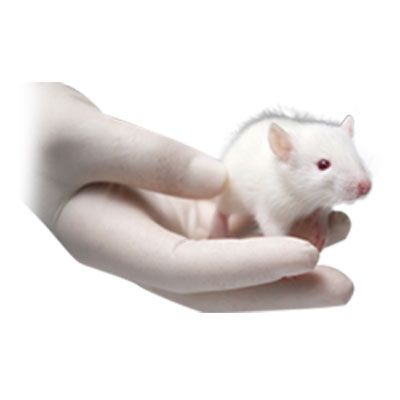
Studies using mice are helping to unravel how the gene defect causes brain damage1, and five years ago a new mouse model2 of HD carrying the same gene defect was developed. It is helping both the understanding of HD and the development of treatments, used alongside strains of rats and monkeys with the disease.
It has been possible to 'turn off' the gene in mice to slow the progression of the disease3. Also, exposing mice carrying the gene defect to a stimulating environment from an early age helped delay onset of the disease4 and improves symptoms once the disease is present5.
Brain cell implants show promise - implants using fetal tissue have been shown to work in monkeys6. Researchers around the world are looking for alternatives to using foetal tissue, which is in short supply and poses ethical problems. One approach is to use stem cells, which have the potential to develop into, and replace, the missing or damaged brain cells. Two independent teams of researchers have succeeded in coaxing human embryonic stem cells to differentiate into primitive brain cells that, when transplanted into mouse brains, developed further into nerve and other types of brain cells7,8.
A possible treatment for HD has been developed using hamster kidney cells genetically engineered to produce a naturally occurring nerve growth factor that protects brain cells. These were injected into the brains of monkeys9 and found to protect them from brain damage in the areas affected by HD. Further animal trials are needed to weigh up the risks and benefits.
Huntington's disease is linked to enzymes called caspases that are active in patients' brains and cause brain cells to die.10 Scientists blocked caspases in mice carrying the Huntington gene defect, with the result that they developed HD symptoms about 10% later in life and lived about 20% longer than HD mice in which the enzyme wasn't blocked. Such therapy can't be used in humans, but it has since proved possible to block caspases in these mice using a common antibiotic, minocycline11, one of the tetracycline family.
Preventing build-up of protein aggregates
Another feature of the disease is the build up of protein aggregates in the brain because the faulty gene produces a mutant protein, htt, which aggregates readily and is regulated by a substance called arfaptin. In tissue culture arfaptin induces the formation of aggregates containing the htt protein, and is overproduced in the brains of HD mice12.
The htt protein contains excessive amounts of an aminoacid, glutamine, and the brain attempts to cope with it by producing neuroprotective proteins. An enzyme called transglutaminase helps these proteins stick together, and a compound called cystamine can prevent this. So researchers injected mice with Huntington's with cystamine, which reduced tremors and abnormal movements and increased lifespan. To the researcher's surprise, the protein aggregates remained unchanged but the quantity of neuroprotective proteins increased, suggesting a new treatment strategy13.
Scientists have discovered how htt, generated by the Huntingtin gene, poisons nerve cells in the hypothalamus, part of the midbrain of mice. They demonstrated that the mutant proteins interfere with the function of another protein abundant in the hypothalamus – huntingtin-associated protein-1 (HAP1)14.
Mice genetically engineered to develop Huntington’s disease had fewer symptoms and declined at a slower rate when given gene therapy so that their brains produced a chemical called ciliary neurotrophic factor. Other researchers are now working to produce medication that has a similar effect. The research is further evidence that the lack of certain neurotrophic factors are key to the progressive symptoms of Huntington's15.
Researchers have successfully rid mice of a condition similar to Huntington's disease using a laboratory dye that dissolves protein clumps. Although the dye does not cross the blood brain barrier and therefore is unlikely to end up as a treatment for humans, it may open up new lines of research16.
As in many neurological diseases, there is a chain of cell death. In rats treated with a bile acid called TUCDA the amount of cell death was halved. TUCDA crosses the blood-brain barrier, and it is being developed as a possible treatment for Huntington's disease17.
June 2004
1. Scherzinger E, Lurz R, Turmaine M et al (1997) Huntingtin-encoded polyglutamine expansions form amyloid-like protein aggregates in vitro and in vivo. Cell 90(30) 549
2. Hodgson JG, Agopyan N, Gutekunst C-A et al (1999) A YAC mouse model for Huntington's disease with full-length mutant huntingtin, cytoplasmic toxicity, and selective striatal neurodegeneration Neuron 23 181
3. Yamamoto A, Lucas JJ, Hen, R (2000) Reversal of neuropathology and motor dysfunction in a conditional model of Huntington's Disease. Cell 101 57
4. Dellen AV, Blakemore C, Deacon R, York D & Hannan AJ (2000) Delaying the onset of Huntington's in mice Nature 404 721
5. Spires TL, Grote HE, Varshney NK et al (2004) Environmental enrichment rescues protein deficits in a mouse model of Huntington's disease, indicating a possible disease mechanism. J Neurosci 24 2270
6. Kendall AL, Rayment FD, Torres EM et al (1998) Functional integration of striatal allografts in a primate model of Huntington's disease Nature Medicine 4: 727
7. Reubinoff BE, Itsykson P, Turetsky T et al (2001) Neural progenitors from human embryonic stem cells. Nature Biotechnology 19 1134
8. Zhang S-C, Wernig M, Duncan ID (2001) In vitro differentiation of transplantable neural precursors from human embryonic stem cells Nature Biotechnology 19 1129
9. Emerich DF, Winn SR, Hantraye PM, Peschanski M, Chen E-Y, Chen Y, McDermott P, Baetge EE & Kordower JH (1997) Protective effect of encapsulated cells producing neurotrophic factor CNTF in a monkey model of Huntington's disease Nature 386 395
10. Ona VO, Li M, Vonsattel JPG et al (1999) Inhibition of caspase-1 slows disease progression in a mouse model of Huntington's disease Nature 399 263
11. Chen M, Ona VO, Li M et al (2000) Minocycline inhibits caspase-1 and caspase-3 expression and delays mortality in a transgenic mouse model of Huntington disease Nature Med 6797
12. Peters PJ, Ning K, Palacios F et al (2002) Arfaptin 2 regulates the aggregation of mutant huntingtin protein. Nature Cell Biology 4 240
13. Karpu MV, Mark W. MW, Springer JE (2002) Prolonged survival and decreased abnormal movements in transgenic model of Huntington disease, with administration of the transglutaminase inhibitor cystamine Nature Med 8 143
14. Li S-H, Yu Z-X, Li C-L et al (2003) Lack of huntingtin-associated protein-1 causes neuronal death resembling hypothalamic degeneration in Huntington's disease. J Neurosci 23 6956
15. Zala D, Bensadoun J-C, Pereira de Almeida L et al (2004) Long-term lentiviral-mediated expression of ciliary neurotrophic factor in the striatum of Huntington’s disease transgenic mice. Exp Neurol 185 26
16. Sanchez I, Mahlke C, Yuan J (2003) Pivotal role of polymerisation in expanded polyglutamine neurodegenerative disorders. Nature 421 373
17. Rodriguez CMP, Sola S, Nan Z (2003) Tauroursodeoxycholic acid reduces apoptosis and protects against neurological injury after acute hemorrhagic stroke in rats. Proc Nat Acad Sci 100 6087
Tags
Research Fields: Biochemistry, Genetics, Brain & nervous system(yes - 3 items)Animals Used: Mouse (knockout/GM), Hamster(required - 2 items)