
Leukaemia
Fifty years ago there were no drugs for leukaemia, or any other form of cancer. Twenty five years ago nine out of ten children with the commonest form of childhood leukaemia, acute lymphocytic leukaemia, died. Now, thanks to a combination of chemotherapy, radiotherapy and bone marrow grafting, children with this form of leukaemia have an eight in ten chance of survival.
> Nitrogen mustard studies lead to early cancer treatments
> Folic acid type drugs and other treaments
> The basis of modern cancer chemotherapy
Nitrogen mustard studies lead to early cancer treatments
The whole concept of treating cancer with cell-destroying chemicals stemmed from studies carried out on nitrogen mustards at Yale University in the early 1940s. The US Office of Scientific Research and Development was interested in the study of nitrogen mustards since it was feared that they might be used as chemical warfare agents.
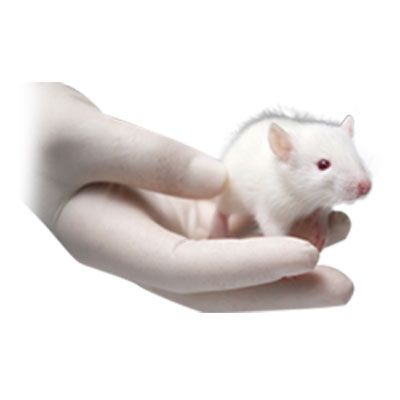
Experiments on mice and rabbits showed that nitrogen mustards rapidly reduced the level of white cells in the blood. Since this suggested that the drugs killed rapidly growing cells, they were tested on mice with tumours. The tumours shrank and this led to the use of these drugs in patients with lymphomas and leukaemias.1,2
Folic acid type drugs and other treatmentsAnother type of anti-cancer drug arose from observations that certain folic acid-like compounds could inhibit the growth of breast tumours in mice.3 Methotrexate, a powerful antifolate, was tested in rats in 19494 and produced a fall in white cell levels. In the same year it was shown to prolong survival in mice with leukaemia5 and was used by Sidney Farber to treat children with leukaemia.6
Other successful drugs for leukaemia have been developed. For instance, vincristine, isolated from the periwinkle (Vinca rosa), was initially shown to depress bone marrow production in animals and was then shown to cure leukaemia in mice.7
The basis of modern cancer chemotherapy
Animal models were also crucial in establishing the principles that underpin modern cancer chemotherapy. Using a mouse leukaemia model, Skipper8 in 1973 showed that:
- a single malignant cell can divide and eventually form enough cells to kill the host, showing that it is essential to destroy every such cell
- the immune system plays little or no part in the therapy of malignant disease, and a given dose of drug will kill a fixed proportion of cancer cells regardless of the total size of the malignancy.
Thus cancer therapy aims for total removal of malignant cells at the outset, continuing therapy after remission, and later the use of a combination of several drugs.
The emphasis on destroying tumour cells when they are still relatively few in number (methotrexate, for example, only cured mice when treatment was started shortly after inoculation of a small number of malignant cells), did much to encourage research on early diagnosis of cancers. While it may seem obvious now, it was the research using mice which highlighted the fact that early treatment increases the probability of a cure.
1. Gilman A (1963) Amer J Surg 105, 574-578
2. Karnofsky D, Craver L, Rhoads C & Abels J (1947) In: Approaches to tumour chemotherapy. American Association for the Advancement of Science, Washington
3. Leuchtenberger C, Lewisohn R, Laszlo & Leuchtenberger R (1944) Proc Soc Exper Biol Med 55, 204-205
4. Franklin A, Belt M, Stoksstad E & Jukes T (1949) J Biol Chem 177, 621-629
5. Burchenal J, Johnson S, Burchenal JR, Kushida M, Robinson E & Stock C (1949) Proc Soc Exper Biol Med 71, 381- 387
6. Farber S (1949) Blood 4 , 160-167
7. Johnson I, Armstrong J, Gorman M and Burnett J (1963) Cancer Res, 23, 1390-1427
8. Skipper H, Schabel F (1973) In Cancer Medicine, (Holland J & Frei E eds) Lea & Febiger, pp 629-650
(yes)Tags
Research Fields: Cell biology, Cancer research, Drugs & toxins(yes - 3 items)Animals Used: Mouse, Rabbit(required - 2 items)