
Regulators of cell cycle
Cells divide continuously throughout the life of an organism, allowing it to grow, and then to replace tissue. Cell growth and division is governed by the cell cycle. Cell cycle consists of several stages which must be precisely co-ordinated. Errors in cell cycle can lead to parts of chromosomes being altered or lost, causing cancers.
Leland Hartwell discovered a specific class of genes that control cell cycle. Using a yeast, Saccharomyces cerevisiae, as a model organism, he isolated cells whose cycles were controlled by mutant genes. He identified over 100 genes involved in control of cell cycle. One of these determined the first step in the cycle and was called ‘start’. He also introduced the concept of ‘checkpoint’, which stops the cell cycle when DNA is damaged, after studying the sensitivity of the cells to irradiation.
Paul Nurse worked with Saccharomyces pombe, a yeast only distantly related to S cerevisiae. He identified the gene cdc2, and showed that it carried out the same role as Hartwell’s ‘start’ gene. Studying this gene he discovered CDK, a key regulator of cell cycle which drives cell cycle through modification of other proteins. He showed that the fundamental role of CDK remains in cells is largely unchanged by evolution, and occurs in animals and humans, as well as yeast.
Timothy Hunt discovered that CDK function was found to be regulated by a class of proteins called cyclins. Using the sea urchin Arbacia, he showed that these proteins are formed and degraded during each cell cycle. Cyclins were eventually discovered in other species, including humans.
(yes)
Tags
Research Fields: Cell biology, Genetics(yes - 2 items)Date: 2001 (required)
Scientist(s): Leland Hartwell, Timothy Hunt, Paul Nurse (required)
Countries: United States of America, United Kingdom(yes - 2 items)
Animals Used: Other invertebrate, Sea urchin(required - 1 items)
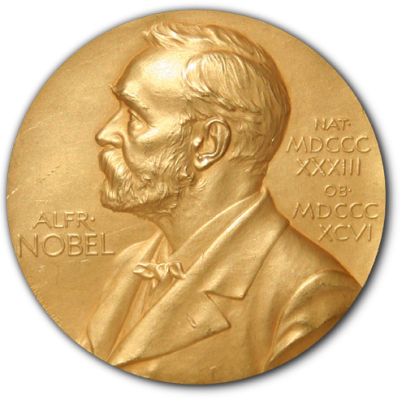
Description: Hartwell, Hunt and Nurse were awarded the 2001 Nobel Prize for physiology or medicine for their discoveries concerning the regualtion of cell cycle. (yes)
Medical Applications: Basic research(yes - 1 items)