
Discovery of nitric oxide

red blood cells 
 

Furchgott began examining the effects of drugs on blood vessels during his first faculty position at Washington University, Missouri (1949-1953), before continuing his work at the State University of New York. In 1978, Furchgott saw an unexpected results in his experiments after his technician failed to follow the usual protocol for preparing strips of rabbit aorta: when he applied acetylcholine to the tissue, he saw relaxation, rather than the expected contraction.

In seeking to explain his finding, he realised that gently rubbing the endothelial layer of blood vessels caused the tissue to contact rather than relax. He felt that acetylcholine may have acted on the endothelial cell receptors, causing the release of a substance that relaxed the tissue. This substance became known as endothelium derived relaxing factor.

Evidence for the nature of EDRF soon emerged. Ferid Murad showed that nitroglycerine, which relaxes blood vessels by converting GTP to cGMP, is converted to nitric oxide in the body, and that NO is biologically active, producing its own effects on cells. There were striking similarities between EDRF and NO: they both stimulated formation of cGMP and haemoglobin was able to interfere with these effects. The chemical Methylene blue, also interfered with the action of both EDRF and NO.

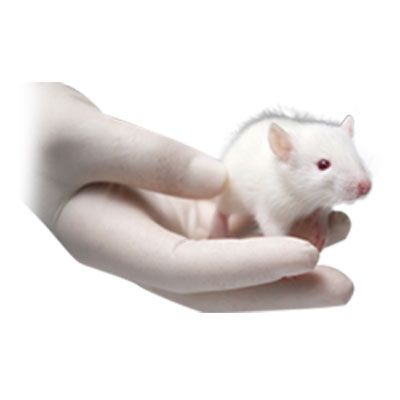
Furchgott and Louis Ignarro, professor of pharmacology at UCLA,   independently carried out tests on rat and rabbit tissue to show that haemoglobin, methylene blue and superoxide generators had similar effects on both EDRF and NO, and that these substances acted similarly on cGMP. They presented data at the same meeting in 1986, concluding that EDRF is NO and an important signalling molecule of the cardiovascular system. 

The widespread effects of NO on the nervous system (where it acts as a neuromodulator) and the cardiovascular system are now better known, although the actions of this small molecule which easily diffuses though the body remain difficult to measure, and full understanding of its effects remains a challenge.

(yes)

Tags

Research Fields: Heart, lung & circulation(yes - 1 items)

Date: 2009 (required)
Scientist(s): Furchgott, Muand and Ignarro (required)
Countries: United States of America(yes - 1 items)

Animals Used: Rat, Rabbit(required - 2 items)

Description: . (yes)
Medical Applications: Medicine, Basic research(yes - 2 items)

  • Blinklist  
  • Blogmarks  
  • Bluedot  
  • Del.icio.us  
  • Digg  
  • Diigo  
  • Friendsite  
  • FURL  
  • Ma.gnolia  
  • Google Bookmarks  
  • Netvouz  
  • Newsvine  
  • Reddit  
  • Simpy  
  • StumbleUpon  
  • Tailrank  
  • Technorati  
  • Yahoo  
  • View the top 10
  • Site tools
  • Print this page
  • Send to a friend
  • Subscribe to RSS
  • Look in Dictionary