
The role of chromosomes in heredity
![]() |
| Drosophila melanogaster © istockphoto/Vinicius Ramalho Tupinamba |
Thomas Hunt Morgan was sceptical of the way that biological traits were arbitrarily ascribed to hereditary influences, and set out to discover the physiological basis for inheritance.
Drosophila, with its short life cycle, ease of culturing, low cost and high reproductive rate, was selected as a suitable animal model for the studies. Initially the fruit flies were raised on bananas before a standard culture medium was developed. He eventually found useful mutations, the first of which was white-eyed fly, allow him to study sex-linked inheritance He proposed the idea of ‘crossing over’ in which genetic information is exchanged between the male and female gametes during meiosis.
More mutations were discovered, and could be connected into four groups, which corresponded with the four pairs for chromosomes found in drosophila. The small number of chromosomes made drosophila a fortunate choice of model, and proof that genetic material was carried on chromosomes came in a 1916 paper, which showed that irregular segregation of sex chromosomes during fertilisation (non-disjunction) results in dramatic mutation.
Morgan developed four new rules of inheritance, which followed from Mendel’s laws, and through his careful breeding experiments gave a physical basis for inheritance of genetic characteristics.
Tags
Research Fields: Genetics(yes - 1 items)Date: 1933 (required)
Scientist(s): Thomas Hunt Morgan (required)
Countries: United States of America(yes - 1 items)
Animals Used: Drosophila (fruit fly)(required - 1 items)
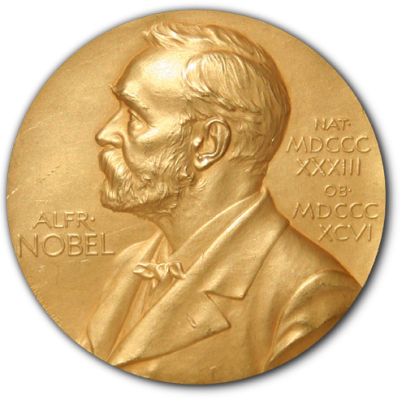
Description: Thomas Hunt Morgan received the 1933 Nobel Prize in physiology or medicine for showing that genes are carried on chromasomes, and that chomasomes are responsible for heredity (yes)
Medical Applications: Basic research(yes - 1 items)