
First tissue-engineered whole-organ transplant
![]() |
| The trachea ready for transplant |
First tissue-engineered whole-organ transplant
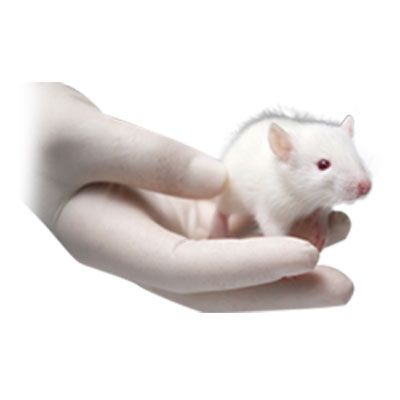
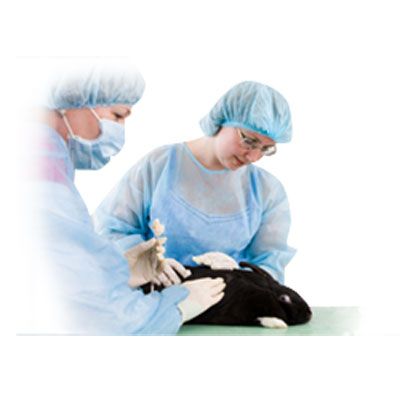
A team led by Professor Paolo Macchiarini at Universitat de Barcelona, Spain have carried out the first whole-organ transplant to be made using tissue engineered from the patient’s own stem cells.1 The surgery was performed in June 2008, following preclinical studies on mice and pigs which made the team confident that their method could be used in humans.
The patient was Claudia Castillo, who was 30 at the time of the procedure. She had suffered from tuberculosis which had left her with permanent damage to her trachea and left lung. Loss of normal airway function can be devastating, and Claudia was left unable to carry out normal domestic chores or care for her children.
Attempts to replace large airways through surgical procedures have often been difficult, and have led to serious complications such as necrosis of the graft, severe bleeding and infections. These procedures have a high mortality rate and since damage to the trachea is not a life-threatening condition there has been a drive to find alternative approaches since the mid 1990s. Claudia consented to the new transplant technique, which had been developed using mice and pigs, and which had not generated the immunological response usually associated with organ transplants.
Transplantation of the airways is particularly complex because the mucosa which line the passages contain many immune cells which cause transplant rejection. Controlling the graft rejection usually requires high doses of immunosuppressive drugs, but there were good indications from the animal studies that the new organ could develop a functional blood supply and would not be rejected.2
The trachea was taken from a 51 year old donor who had died from a cerebral haemorrhage. It was decellularised over a six week period using a new technique to remove all the donor cells so that only the ‘matrix’, a scaffold which gave the structure of the trachea remained.
Stem cells were taken from Claudia’s bone marrow, and were cultured by Martin Birchall’s team at the University of Bristol, UK. The stem cells matured into chrondrocytes using culture techniques originally devised for treating osteoarthritis. Once a large population of chrondrocytes had been grown they were seeded onto the trachea matrix using a syringe, and a population of epithelial cells, which form the lining of the airway were also seeded. The seeding took place in a bio-reactor, developed at the Politecnico di Milano, Italy, to provide the correct conditions and nutrients for the growth of each cell type.
Four days after seeding the trachea was populated with the patient’s cells, and was used in the transplant surgery. After being monitored in intensive care for two days she was well enough to return to the ward. Just four days after the transplant the graft was almost indistinguishable from the nearby normal tissue. Claudia developed no complications was able to return home ten days after the surgery. She has remained well since, and is now able to walk up stairs and care for her children.
Claudia has not received immuno-suppressive drugs to control rejection, and follow-up checks at two and four months following the surgery showed no signs of inflammation or anti-donor antibodies. Further follow-up checks after six months are planned before full clinical trials can go ahead.
This transplant appears to have been a first-time success, despite slight adjustments to the methods from those used in animals, and well-known differences in structure between the human and pig trachea. The surgeons found that the similarities between the pig and human tissue, both pre and post-operatively was remarkable, enabling them to plan their work precisely.
References
1. Macchiarini, P. et al. (2008) Clinical transplantation of a tissue-engineered airway, The Lancet, published online 19 Nov 2008, DOI:10.1016/S0140-6736(08)61598-6
2. Jungebluth, P., Go, T. et al (2008) Structural and morphological evaluation of a novel enzymatic detergent tissue engineered tracheal tubular matrix, J Thorac Cardiovasc Surg (in press).
Tags
Research Fields: Medical technologies, Infection and Immunity, Heart, lung & circulation(yes - 3 items)Date: 2008 (required)
Scientist(s): Paulo Macchiarini (yes)
Countries: United Kingdom, Spain, Italy(yes - 3 items)
Animals Used: Mouse, Pig(yes - 2 items)
Medical Applications: Surgery, Medicine(yes - 2 items)